




Can HSS step drill be used for tungsten carbide?
 Dec 16, 2025|
 Hey there! As a supplier of HSS step drills, I often get asked a bunch of questions about the capabilities of these handy tools. One question that pops up quite a bit is, "Can HSS step drill be used for tungsten carbide?" Well, let's dig into this topic and find out.
First off, let's talk a bit about what HSS step drills are. High-Speed Steel (HSS) step drills are pretty awesome tools. They're designed to drill holes of different diameters in a single operation. You can start with a small hole and gradually increase the size as you go, which is super convenient, especially when you're working on projects where you need multiple hole sizes. There are two main types: the Straight Flute Step Drill and the Spiral Flute Step Drill. The straight flute ones are great for more precise and controlled drilling, while the spiral flute ones are better at chip evacuation, which can be a big deal when you're drilling for a long time.
Now, onto tungsten carbide. Tungsten carbide is a super-hard material. It's made by combining tungsten and carbon, and it's known for its high strength, wear resistance, and heat resistance. You'll find tungsten carbide in all sorts of industrial applications, from cutting tools to mining equipment. It's tough as nails, and that's both a good thing and a challenge when it comes to drilling.
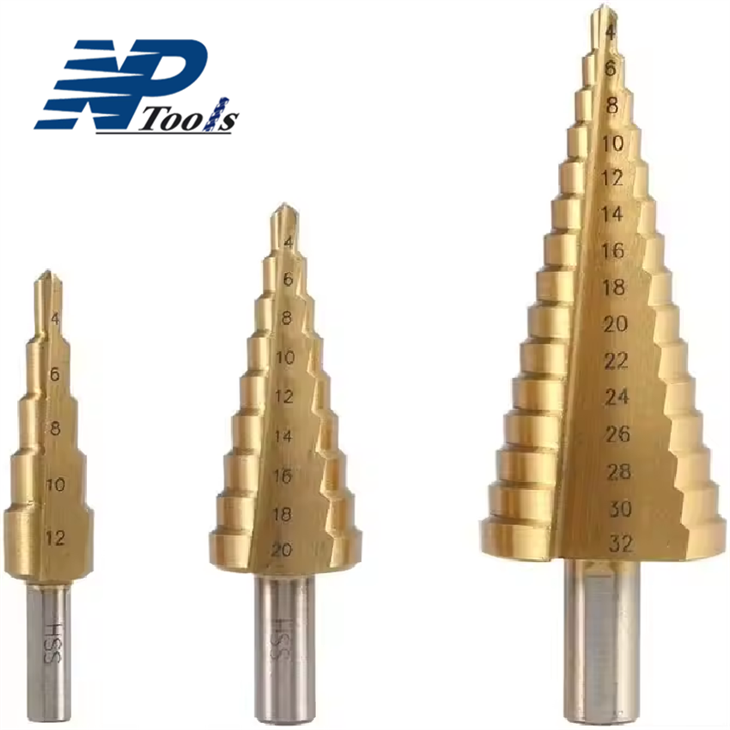

So, can HSS step drills be used for tungsten carbide? The short answer is, it depends. HSS step drills are designed to work on a variety of materials, including metals, plastics, and wood. But tungsten carbide is in a different league. Its hardness is much higher than most of the materials that HSS step drills are typically used on.
One of the main factors to consider is the hardness difference. HSS has a hardness rating of around 62 - 65 HRC (Rockwell Hardness Scale), while tungsten carbide can have a hardness rating of up to 90 HRA (a different scale, but still much harder). This means that when you try to drill tungsten carbide with an HSS step drill, the drill bit will face a lot of resistance. The high hardness of tungsten carbide can cause the HSS drill bit to wear out quickly. The cutting edges of the drill bit can dull rapidly, and in some cases, the bit might even break.
Another issue is the heat generated during drilling. Drilling is a process that generates a lot of heat. When you drill a hard material like tungsten carbide, the heat can be even more intense. HSS step drills start to lose their hardness at relatively high temperatures. If the heat builds up too much during the drilling process, the HSS drill bit can soften, which further reduces its cutting ability and lifespan.
However, there are some situations where you might be able to use an HSS step drill on tungsten carbide. If the tungsten carbide is in a less dense or less hard form, like a thin sheet or a part with a lower carbide content, an HSS step drill might work. You'll need to take some precautions, though. First, you should use a slow drilling speed. This helps to reduce the heat generated and gives the drill bit a better chance of cutting through the material without getting too hot. Second, you need to use plenty of coolant. Coolant helps to dissipate the heat and lubricate the cutting edges of the drill bit, which can extend its lifespan.
If you're thinking about using an HSS step drill on tungsten carbide, it's also important to consider the quality of the drill bit. Not all HSS step drills are created equal. A high-quality drill bit made from premium HSS material will generally perform better and last longer than a cheaper, lower-quality one. Look for drill bits that have been properly heat-treated and have sharp, well-ground cutting edges.
In some cases, you might find that using an HSS step drill on tungsten carbide is just not worth it. The wear and tear on the drill bit can be so significant that it becomes too costly in terms of both time and money. In those situations, it might be better to use a drill bit specifically designed for tungsten carbide, like a carbide-tipped drill bit. Carbide-tipped drill bits have a cutting edge made of tungsten carbide, which is much better suited for drilling this hard material.
But hey, if you're in a pinch and you only have an HSS step drill on hand, and the tungsten carbide job isn't too demanding, it's worth giving it a try. Just make sure you follow the tips I mentioned earlier about slow speed and using coolant.
If you're in the market for HSS step drills, whether you're planning to use them on tungsten carbide or other materials, we've got you covered. Our Straight Flute Step Drill and Spiral Flute Step Drill are made from high-quality HSS material and are designed to provide excellent performance. We offer a wide range of sizes and specifications to meet your specific needs.
If you have any questions about our HSS step drills or need advice on using them for different materials, don't hesitate to reach out. We're here to help you make the right choice for your drilling projects. Whether you're a professional in the industry or a DIY enthusiast, we can provide you with the information and products you need. So, if you're interested in purchasing our HSS step drills or want to discuss your requirements further, just get in touch, and we'll start the conversation.
References
- "Materials Science and Engineering: An Introduction" by William D. Callister Jr. and David G. Rethwisch
- Various industry reports on cutting tools and materials