




How many steps does a typical spiral flute step drill have?
 Jan 12, 2026|
 When it comes to precision drilling, spiral flute step drills have become an indispensable tool across various industries. As a leading supplier of Spiral Flute Step Drill, I often receive inquiries about the number of steps in a typical spiral flute step drill. This blog post aims to delve into this topic in detail, providing you with a comprehensive understanding of spiral flute step drills and their step configurations.
Understanding Spiral Flute Step Drills
Before we discuss the number of steps, let's first understand what a spiral flute step drill is. Unlike traditional drills, a step drill is designed with multiple steps of different diameters on a single drill bit. This unique design allows it to drill holes of various sizes without the need to change drill bits, significantly increasing efficiency and reducing downtime.
The spiral flute design of these drills is another key feature. The spiral flutes help to evacuate chips more effectively during the drilling process, preventing chip clogging and ensuring a smoother, more precise drilling operation. This makes spiral flute step drills particularly suitable for applications where high precision and clean holes are required, such as in the aerospace, automotive, and electronics industries.
Factors Influencing the Number of Steps
The number of steps in a spiral flute step drill can vary depending on several factors. These factors include the intended application, the range of hole sizes required, and the material being drilled.
Intended Application
The specific application of the drill plays a crucial role in determining the number of steps. For example, in a manufacturing process where a wide range of hole sizes needs to be drilled frequently, a step drill with more steps would be more suitable. This allows operators to drill different hole sizes without having to switch between multiple drill bits, saving time and increasing productivity.
On the other hand, for applications where only a few specific hole sizes are required, a step drill with fewer steps may be sufficient. This can simplify the drilling process and reduce the cost of purchasing and maintaining a large number of drill bits.
Range of Hole Sizes
The range of hole sizes that the drill needs to cover also affects the number of steps. If the application requires drilling holes with a large variation in diameters, a step drill with more steps will be necessary to achieve the desired range of sizes. For instance, if you need to drill holes ranging from 1/8 inch to 1/2 inch, a step drill with 5 - 8 steps might be appropriate.
Conversely, if the range of hole sizes is relatively small, a step drill with fewer steps can be used. This can reduce the length and complexity of the drill, making it easier to handle and store.
Material Being Drilled
The type of material being drilled is another important factor. Different materials have different hardness and machining properties, which can influence the number of steps a drill can effectively handle. For example, when drilling through hard materials such as stainless steel or titanium, a step drill with fewer steps may be preferred. This is because the drill needs to exert more force and generate more heat when drilling through hard materials, and a drill with too many steps may cause excessive tool wear and reduce the drill's lifespan.
In contrast, when drilling through softer materials such as wood or plastic, a step drill with more steps can be used more effectively. The softer materials are easier to drill through, allowing the drill to handle more steps without significant tool wear.
Typical Number of Steps
So, how many steps does a typical spiral flute step drill have? In general, spiral flute step drills can have anywhere from 3 to 10 steps, but the most common configurations are 5 - 7 steps.
A step drill with 5 steps is a popular choice for many applications. It provides a good balance between the range of hole sizes it can drill and the ease of use. A 5 - step drill can typically cover a range of hole sizes from around 1/8 inch to 3/8 inch, which is suitable for a wide variety of general - purpose drilling tasks in materials such as mild steel, aluminum, and wood.

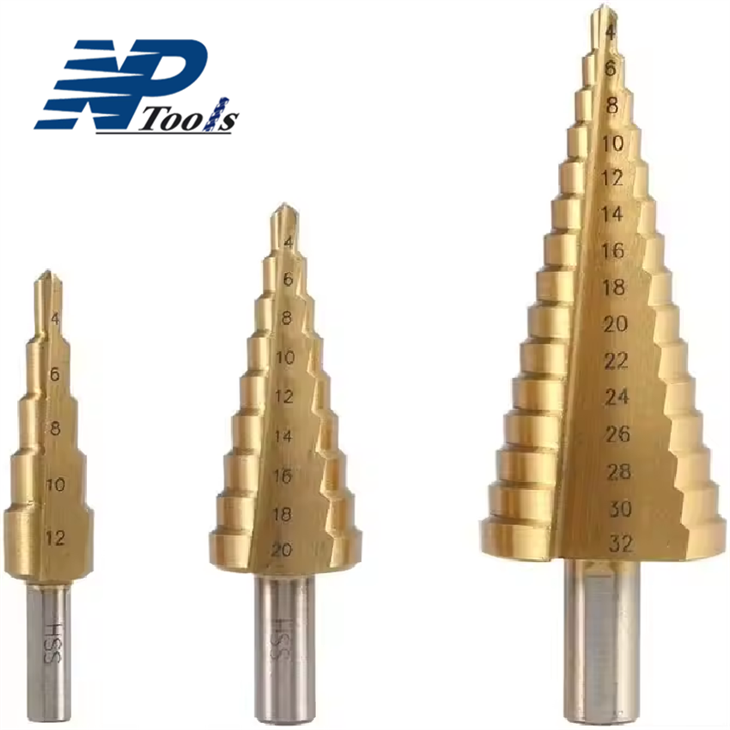
A step drill with 6 or 7 steps offers a slightly wider range of hole sizes. This can be useful for applications where a greater variety of hole sizes is required, such as in custom fabrication or precision engineering. A 6 - or 7 - step drill can often cover a range of hole sizes from about 1/8 inch to 1/2 inch, providing more flexibility for different drilling needs.
Comparison with Straight Flute Step Drill
It's also worth comparing spiral flute step drills with straight flute step drills. Straight flute step drills are another type of step drill commonly used in the industry. While they share the same basic concept of multiple steps on a single drill bit, they have some differences in terms of chip evacuation and performance.
Spiral flute step drills are generally better at chip evacuation due to their spiral design. As mentioned earlier, the spiral flutes help to carry the chips out of the hole more effectively, reducing the risk of chip clogging and improving the drilling quality. This makes them more suitable for high - speed drilling and applications where clean holes are essential.
On the other hand, straight flute step drills are often simpler in design and can be more cost - effective. They are also suitable for applications where the material being drilled is not too difficult to machine and chip evacuation is not a major concern.
Choosing the Right Step Drill
When choosing a spiral flute step drill, it's important to consider the specific requirements of your application. As a supplier, I can offer some guidelines to help you make the right choice.
First, determine the range of hole sizes you need to drill. This will help you decide how many steps the drill should have. If you need to drill a wide range of hole sizes, a drill with more steps may be necessary. However, keep in mind that a drill with too many steps may be more expensive and more difficult to handle.
Second, consider the material you will be drilling. Harder materials require drills with more robust designs and fewer steps to ensure long - term performance. Softer materials can tolerate drills with more steps and may benefit from the increased efficiency of a multi - step drill.
Finally, think about the frequency of use and the level of precision required. If you need to drill holes frequently and with high precision, investing in a high - quality spiral flute step drill with the appropriate number of steps is recommended.
Contact for Purchase and Consultation
If you are in the market for spiral flute step drills or have any questions about choosing the right drill for your application, I encourage you to reach out to us. As a trusted supplier of Spiral Flute Step Drill, we offer a wide range of step drills with different numbers of steps and specifications to meet your specific needs. Our team of experts is always ready to provide you with professional advice and support. Whether you are a small - scale workshop or a large - scale manufacturing plant, we can help you find the perfect drill for your operations.
References
- Machinery's Handbook, 31st Edition
- Cutting Tool Engineering Magazine, various issues on drill bit technology
- Textbooks on manufacturing processes and machining technology