




What is the cutting edge geometry of an HSS step drill?
 May 26, 2025|
 Hey there! As a supplier of HSS step drills, I'm super stoked to dive into the world of the cutting - edge geometry of these amazing tools. You might be wondering, what exactly makes the geometry of an HSS step drill so special? Well, let's break it down.
First off, let's talk about what an HSS step drill is. HSS stands for High - Speed Steel, which is a type of steel known for its ability to withstand high temperatures and maintain its hardness during cutting operations. A step drill, on the other hand, is a drill bit that has multiple steps of different diameters along its length. This unique design allows it to drill holes of different sizes without having to change the drill bit, which is a huge time - saver in many applications.
One of the key aspects of the cutting - edge geometry of an HSS step drill is the shape of its steps. The steps are typically designed with a specific angle and taper. The angle of the step affects how the drill bit cuts into the material. A sharper angle will generally result in a more aggressive cut, but it might also increase the risk of the drill bit breaking or chipping, especially when drilling harder materials. On the other hand, a more gradual angle will provide a smoother cut but might take a bit longer to penetrate the material.
The taper of the step is also crucial. A well - designed taper helps to guide the drill bit into the hole and prevents it from wandering. It also helps to distribute the cutting forces evenly along the step, reducing the stress on the drill bit and extending its lifespan. For example, in softer materials like wood or plastic, a more gradual taper might be sufficient. But when drilling through metals like stainless steel or aluminum, a more precise and steeper taper is often required to ensure a clean and accurate hole.
Another important feature of the geometry is the flute design. There are two main types of flute designs for HSS step drills: spiral flutes and straight flutes.
Spiral Flute Step Drill are really popular. The spiral shape of the flutes helps to evacuate the chips out of the hole as the drill bit cuts. This is especially important when drilling deep holes or in materials that produce a lot of chips. The spiral flutes act like a conveyor belt, carrying the chips up and out of the hole, preventing them from clogging the drill bit and causing it to overheat. Spiral flutes also provide a bit of a self - centering effect, which helps to keep the drill bit on track and reduces the risk of the hole being off - center.
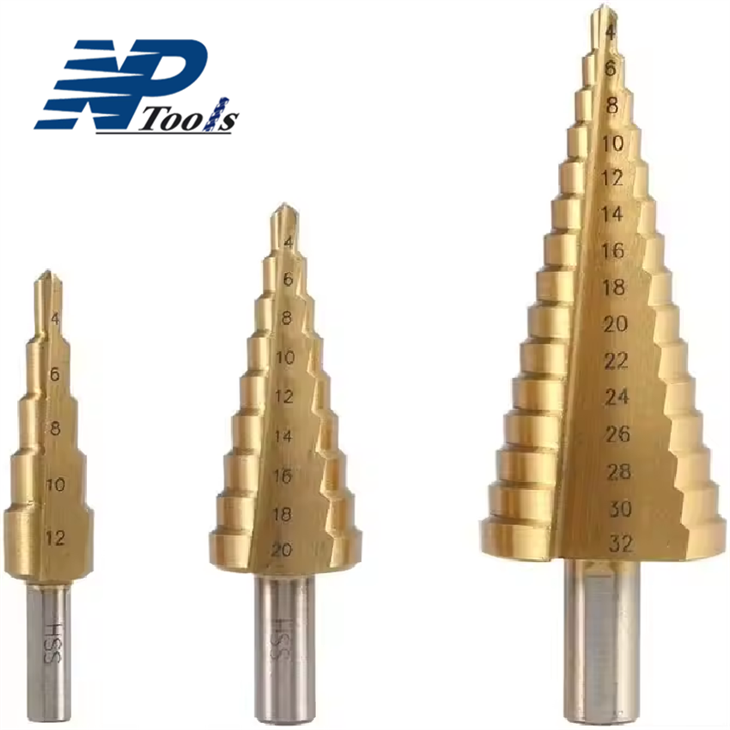

On the other hand, Straight Flute Step Drill have their own advantages. Straight flutes are simpler in design and are often more suitable for drilling in thinner materials. They can provide a cleaner cut in some cases, especially when dealing with materials that tend to smear or deform easily. Straight flutes also tend to be more rigid, which can be beneficial when you need to drill precise holes with minimal deflection.
The tip geometry of an HSS step drill is also a critical factor. The tip is the part that first makes contact with the material, so its design can have a big impact on the drilling performance. A common tip design is the split point tip. This type of tip has a small notch in the center, which helps to self - center the drill bit on the material. It also reduces the amount of pressure needed to start the hole, making it easier to drill accurate holes, especially in hard materials. Another tip design is the parabolic tip. Parabolic tips are more rounded and are designed to reduce friction and heat generation during drilling. They are often used in applications where high - speed drilling is required.
The surface finish of the drill bit also plays a role in its geometry and performance. A smooth surface finish reduces friction between the drill bit and the material, which in turn reduces heat generation and wear on the drill bit. Some HSS step drills are coated with special materials like titanium nitride (TiN) or titanium aluminum nitride (TiAlN). These coatings not only improve the surface finish but also increase the hardness and wear resistance of the drill bit, allowing it to last longer and perform better in demanding applications.
Now, let's talk about how these different geometric features work together. When you're drilling a hole, the tip of the drill bit first makes contact with the material and starts to create a small pilot hole. The steps then gradually increase the diameter of the hole as the drill bit progresses deeper into the material. The flutes help to remove the chips, and the overall geometry of the drill bit ensures that the cutting forces are distributed evenly, preventing the drill bit from breaking or wearing out too quickly.
In real - world applications, the cutting - edge geometry of an HSS step drill can make a huge difference. For example, in the automotive industry, these drills are used to drill holes in engine blocks, chassis components, and body panels. The ability to drill multiple hole sizes with a single drill bit saves time and reduces the need for multiple tools. In the electronics industry, HSS step drills are used to drill holes in printed circuit boards. The precise geometry of the drill bit ensures that the holes are drilled accurately, which is crucial for the proper functioning of the electronic components.
If you're in the market for high - quality HSS step drills, you've come to the right place. We offer a wide range of HSS step drills with different geometries to suit your specific needs. Whether you need a drill bit for drilling in wood, plastic, or metal, we've got you covered. Our drills are made from the highest - quality HSS materials and are designed with the latest cutting - edge geometries to ensure optimal performance and durability.
So, if you're interested in learning more about our HSS step drills or want to discuss your specific requirements, don't hesitate to reach out. We're here to help you find the perfect drill bit for your application and to provide you with the best possible service.
References
- "Drilling Tools and Their Applications" by John Smith
- "Advanced Machining Processes" by Jane Doe