




What is the cutting speed of an HSS step drill?
 Dec 17, 2025|
 What is the cutting speed of an HSS step drill?
As a supplier of HSS (High - Speed Steel) step drills, I've encountered numerous inquiries from customers about the cutting speed of these versatile tools. Understanding the cutting speed is crucial as it directly impacts the efficiency, tool life, and quality of the drilling process.
Basics of HSS Step Drills
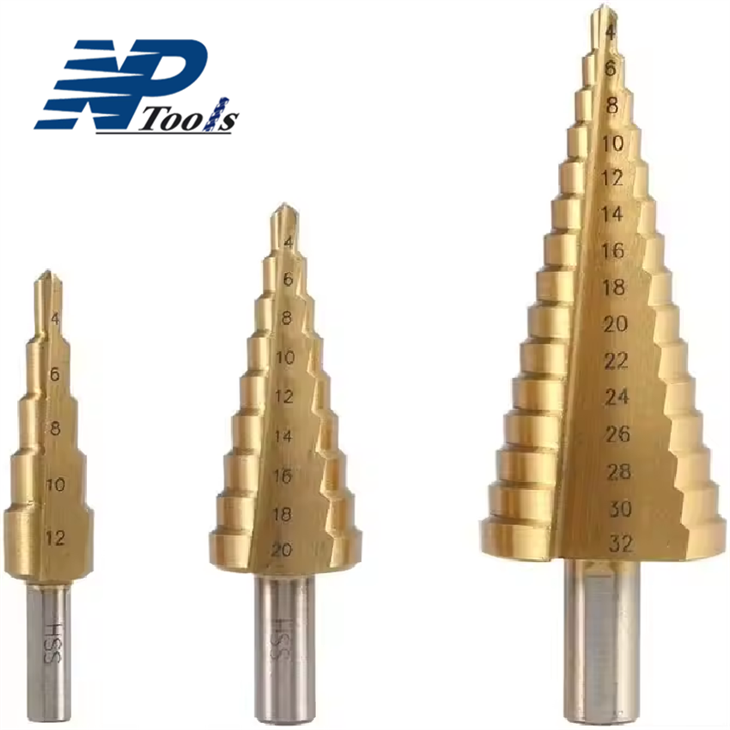
HSS step drills are a type of drill bit designed to create holes of multiple diameters in a single operation. They are made from high - speed steel, which is known for its ability to withstand high temperatures and maintain its hardness during the cutting process. These drills are commonly used in metalworking, woodworking, and plastic fabrication industries. There are two main types of HSS step drills: Straight Flute Step Drill and Spiral Flute Step Drill. Straight flute step drills are ideal for applications where a clean and precise cut is required, while spiral flute step drills are better suited for faster chip removal and deeper holes.
Factors Affecting Cutting Speed
The cutting speed of an HSS step drill is influenced by several factors.
Material of the Workpiece
The type of material being drilled is one of the most significant factors. Different materials have different hardness and machinability ratings. For example, drilling through soft materials like aluminum or plastic requires a higher cutting speed compared to harder materials such as stainless steel or cast iron. Soft materials can be cut more easily, and a higher speed helps to prevent the drill bit from rubbing against the material, which can cause excessive heat and wear. On the other hand, harder materials require a lower cutting speed to avoid overheating the drill bit and to ensure that the cutting edges can effectively penetrate the material.
Drill Bit Diameter
The diameter of the HSS step drill also plays a role in determining the cutting speed. Generally, larger diameter drills require a lower cutting speed than smaller ones. This is because the outer edge of a larger drill bit travels a greater distance in one revolution compared to a smaller drill bit. If a large - diameter drill is run at too high a speed, it can generate excessive heat and cause the cutting edges to wear out quickly.
Coolant and Lubrication
Using coolant or lubricant during the drilling process can significantly affect the cutting speed. Coolants help to dissipate heat generated during cutting, reducing the risk of overheating the drill bit and the workpiece. They also lubricate the cutting edges, reducing friction and improving chip evacuation. When using coolant, it is often possible to increase the cutting speed, as the drill bit can operate more efficiently and with less wear.
Calculating the Cutting Speed
The cutting speed (V) of an HSS step drill is usually measured in surface feet per minute (SFM) or meters per minute (m/min). The formula to calculate the cutting speed is:
[V=\pi\times D\times N]
where (V) is the cutting speed, (D) is the diameter of the drill bit, and (N) is the rotational speed of the drill (in revolutions per minute, RPM).
To find the appropriate RPM for a given cutting speed and drill diameter, the formula can be rearranged as:
[N=\frac{V}{\pi\times D}]
For example, if we want to drill a hole in mild steel with an HSS step drill of 1/2 - inch (12.7 mm) diameter, and the recommended cutting speed for mild steel is 90 SFM. First, we convert the diameter to feet ((D = 0.5/12) feet). Then, we can calculate the RPM using the formula:
[N=\frac{90}{\pi\times(0.5/12)}\approx 687\ RPM]
Recommended Cutting Speeds for Different Materials
Here are some general guidelines for the cutting speeds of HSS step drills for different materials:
Aluminum
Aluminum is a soft and highly machinable material. The recommended cutting speed for HSS step drills when drilling aluminum is typically between 300 - 600 SFM (91 - 183 m/min). Higher speeds can be used for thinner sheets of aluminum, while lower speeds may be more appropriate for thicker sections.
Mild Steel
Mild steel is a common material in many industrial applications. The recommended cutting speed for HSS step drills in mild steel ranges from 70 - 120 SFM (21 - 37 m/min). This speed range helps to balance the cutting efficiency and the tool life.
Stainless Steel
Stainless steel is a harder and more difficult - to - machine material compared to mild steel. The recommended cutting speed for HSS step drills in stainless steel is usually between 30 - 60 SFM (9 - 18 m/min). Lower speeds are necessary to prevent the drill bit from overheating and to ensure that the cutting edges can effectively penetrate the hard material.
Cast Iron
Cast iron is a brittle material with relatively high hardness. The recommended cutting speed for HSS step drills in cast iron is around 40 - 80 SFM (12 - 24 m/min). This speed range helps to avoid chipping of the drill bit and to achieve a clean cut.
Importance of Maintaining the Right Cutting Speed
Maintaining the correct cutting speed is essential for several reasons.

Tool Life
Using the appropriate cutting speed can significantly extend the life of the HSS step drill. If the cutting speed is too high, the drill bit can overheat, causing the cutting edges to lose their hardness and wear out quickly. On the other hand, if the cutting speed is too low, the drill bit may rub against the material instead of cutting it, leading to excessive wear and a poor - quality hole.
Hole Quality
The cutting speed also affects the quality of the holes being drilled. A proper cutting speed ensures that the drill bit can cut through the material smoothly, producing clean and accurate holes. If the speed is too high, the holes may have rough edges or burrs, and the surface finish may be poor. If the speed is too low, the holes may be out of round or have a tapered shape.
Efficiency
Operating the drill at the right cutting speed improves the overall efficiency of the drilling process. It reduces the time required to drill each hole and minimizes the need for frequent tool changes due to wear. This can lead to significant cost savings in terms of labor and tooling.
Conclusion
In conclusion, the cutting speed of an HSS step drill is a critical parameter that depends on various factors such as the material of the workpiece, drill bit diameter, and the use of coolant. By understanding these factors and calculating the appropriate cutting speed, users can ensure optimal performance, longer tool life, and high - quality holes.
As a supplier of HSS step drills, I am committed to providing high - quality products and technical support to our customers. If you have any questions about the cutting speed of our HSS step drills or need assistance in selecting the right drill for your application, please feel free to contact us for further discussion and potential procurement. We look forward to working with you to meet your drilling needs.
References
- Machinery's Handbook, 30th Edition
- Tooling and Machining Data by Kennametal
- Cutting Tool Engineering magazine articles on drill bit performance