




What is the flute width of a spiral flute step drill?
 May 30, 2025|
 Hey there, drill enthusiasts! I'm a supplier of Spiral Flute Step Drill, and today, we're going to dig into a super important aspect of these handy tools: the flute width of a spiral flute step drill.
What's a Spiral Flute Step Drill Anyway?
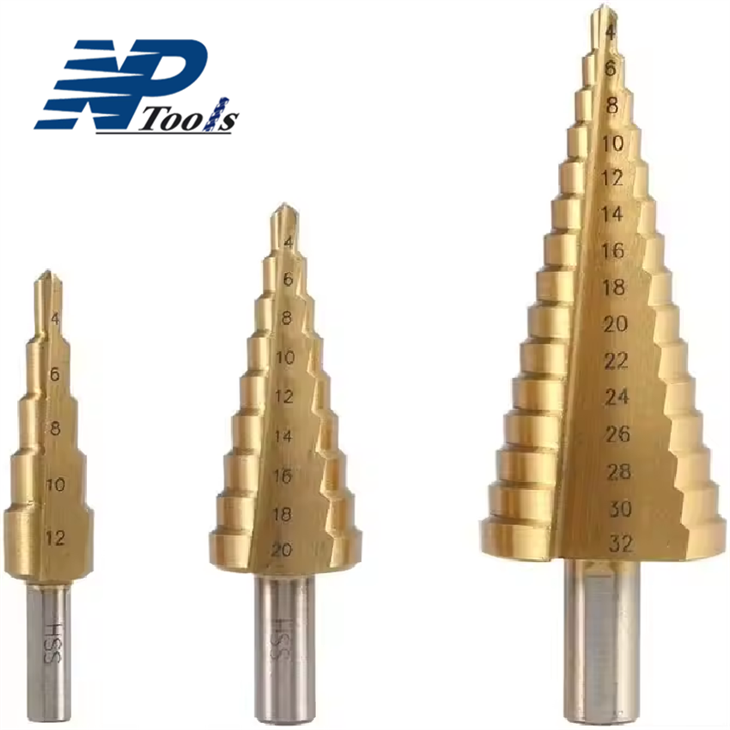
Before we jump into the nitty - gritty of flute width, let's quickly cover what a spiral flute step drill is. These babies are pretty unique. Unlike a regular drill bit, a step drill has multiple stepped diameters. This allows you to drill holes of different sizes with just one tool. The spiral flutes, on the other hand, are those spiral - shaped grooves that run along the length of the drill bit. They play a crucial role in the drilling process, and that's where the flute width comes into play.
Understanding the Flute Width
So, what exactly is the flute width? Well, it's the distance between two adjacent flutes on the drill bit. You can think of it as the "width" of the space within the spiral groove. This may seem like a small detail, but it can have a huge impact on how the drill bit performs.
Chip Evacuation
One of the primary functions of the flutes on a drill bit is to remove chips from the hole as you're drilling. When the flute width is appropriate, it provides enough room for the chips to be carried out of the hole efficiently. If the flute width is too narrow, the chips can get stuck in the flutes. This not only slows down the drilling process but can also cause the drill bit to overheat and wear out faster. On the flip side, if the flute width is too wide, the drill bit may not have enough surface area in contact with the material being drilled, which can lead to poor cutting performance.
Cutting Efficiency and Precision
The flute width also affects the cutting efficiency and precision of the drill bit. A well - designed flute width allows the drill bit to cut through the material smoothly. When the flutes are the right width, the cutting edges of the drill bit can engage with the material evenly. This results in a cleaner hole with better dimensional accuracy. If the flute width is off, you might end up with a ragged hole or a hole that's not the right size.
Factors Affecting the Ideal Flute Width
The ideal flute width for a spiral flute step drill isn't a one - size - fits - all situation. It depends on several factors:
Material Being Drilled
Different materials have different properties. For example, drilling through soft materials like wood or aluminum is a lot different from drilling through hard materials like steel or titanium. Soft materials produce larger chips, so a wider flute width might be more suitable to ensure proper chip evacuation. Hard materials, on the other hand, generate smaller chips but require more thrust and cutting force. In this case, a narrower flute width might be better to maintain the strength and rigidity of the drill bit.

Drill Bit Size
The size of the drill bit also matters. Smaller drill bits generally have narrower flute widths compared to larger ones. This is because smaller drill bits have less space available for the flutes, and a narrower width helps to maintain the structural integrity of the bit. As the drill bit size increases, the flute width can also be increased to handle the larger volume of chips.
Drilling Speed and Feed Rate
Your drilling speed and feed rate can influence the ideal flute width as well. If you're drilling at a high speed and using a high feed rate, you'll generate chips more quickly. In this situation, a wider flute width is needed to ensure that the chips can be removed effectively. If you're drilling at a slower speed, a narrower flute width may be sufficient.
Comparing Spiral Flute and Straight Flute Step Drill
It's also worth comparing spiral flute step drills to straight flute step drills when it comes to flute width. Straight flute step drills have straight grooves that run parallel to the axis of the drill bit. The flute width concept is similar, but the performance characteristics can be quite different.
In a straight flute step drill, the straight flutes offer more stability, which can be beneficial when drilling in harder materials. However, the chip evacuation may not be as efficient as in a spiral flute step drill, especially when drilling deep holes. The spiral flutes in a spiral flute step drill, with the right flute width, are better at carrying chips out of the hole due to their helical shape.
As a Supplier, Why We Care
As a supplier of spiral flute step drills, understanding the importance of flute width is crucial. We need to make sure that our products are designed with the optimal flute width for different applications. This involves a lot of testing and research. We test our drill bits on various materials, at different speeds and feed rates to ensure that they perform as expected.
We also take into account the feedback from our customers. By listening to what they have to say about how our drill bits perform in the real world, we can continuously improve our products. This way, we can offer high - quality spiral flute step drills that meet the needs of our customers, whether they're DIY enthusiasts or professional tradespeople.
Wrap - Up and Call to Action
So, to sum it up, the flute width of a spiral flute step drill is a key factor that affects its performance in terms of chip evacuation, cutting efficiency, and precision. It's not a simple thing, as it depends on the material being drilled, the size of the drill bit, and the drilling conditions.
If you're in the market for a high - quality spiral flute step drill, look no further! We're committed to providing the best products for your drilling needs. Our spiral flute step drills are carefully engineered with the right flute width for optimal performance. Whether you're working on a small home project or a large commercial job, we've got the drill bit for you.
If you have any questions about our products or need advice on which drill bit is right for your specific application, don't hesitate to get in touch. Let's start a conversation about your drilling requirements and find the perfect solution together.
References
- "Drilling in Metals: Processes and Benefits" - An industry - specific technical book
- Online forums and communities where professionals share their experiences with drill bits.